Polished plaster buying guide
'/%3E%3C/svg%3E)
Guide written on 6 February 2024 by:
Tess, painting & decorating consultant, Brighton
Important features
- Surface type
- Lime and lime hemp
- Tadelakt
- Stucco
- Effects
- Powder or paste
How to choose the perfect polished plaster finish
Polished plasters are made up of:
a mineral binder (such as lime, gypsum, cement or clay) or an organic binder (such as acrylic or casein);
mineral components (quartz sand, marble dust);
pigments.
The binders and mineral components provide a range of different effects while the pigments provide colour.
Polished plaster effects
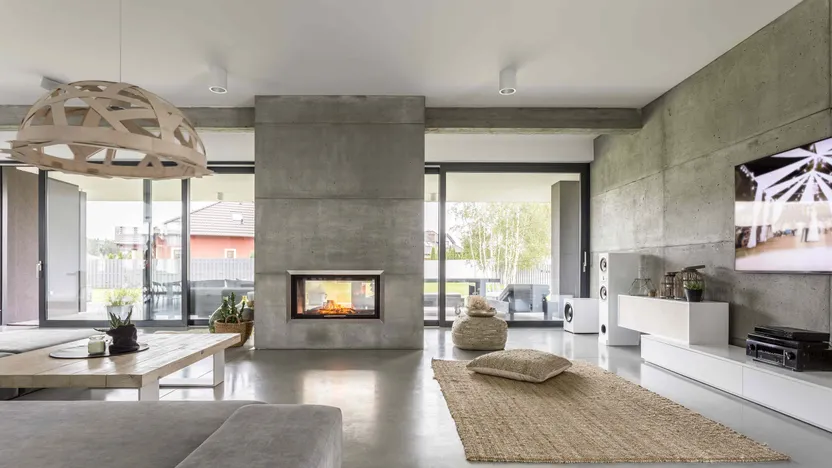
Your choice of polished, or decorative, plaster depends on the look you are going for as well as the type of surface you want to cover. Lime-based plasters, such as Tadelakt, are popular for rooms with a lot of moisture such as bathrooms. Stucco is often made to resemble marble , brick or stone and can be used on walls or ceilings. Finally, there is concrete finish plaster which is a very popular choice for contemporary homes, and can be waxed. It's also possible to choose a decorative plaster with a metallic, sandblasted or even mother-or-pearl finish.
Polished plaster: tricky application
Bear in mind that ease of application will vary depending on the plaster you choose. It's therefore important to be honest about your DIY abilities. You might want to call on the help of a professional for decorative finishes such as waxed concrete.
Decorative plasters are generally applied using a trowel or spatula, depending on the look you want. Other tools can be used to enhance certain effects such as cloths, sponges, brushes, squeegees or even stamps designed for a wood grain effect.
Plastering tools
Choosing a decorative plaster for your surface
Good news – polished plaster can be applied to practically any surface! However, some surfaces need to be coated with a bonding compound (for example, if you want to apply lime plaster over gypsum). Make sure to follow the manufacturer's instructions at all times.
It's also worth noting that while decorative plaster is ideal for covering smooth surfaces from floor to ceiling, its thick texture also works to cover flaws brilliantly , unlike decorative effect paints. In some cases, however, you may have to apply a coat of fine surface filler before application.
Polished plaster can generally be used in any room of the house – including rooms containing moisture such as kitchens and bathrooms – as long as it is protected by products like wax or varnish.
Lime, tadelakt, stucco or concrete effect – which polished plaster should you choose?
A wide range of decorative plasters is available depending on the type of effect you are after and the type of surface you want to cover.
Lime plaster
Lime plaster can be used on any type of surface (excluding metal) and is suitable for indoor and outdoor use. Beyond its obvious aesthetic qualities, lime plaster has the advantage of being both breathable and waterproof. When it comes to choosing a colour, bear in mind that this material will get lighter as it cures.
Lime hemp plaster
Lime plaster can be mixed with hemp for a rustic finish. This finish also significantly improves thermal insulation. It is ideal for covering stone or brick walls.
Tadelakt
Tadelakt is a type of traditional Moroccan plaster. This lime-based plaster can be used in any room of the home to give it a Mediterranean feel. It is particularly popular for rooms with a lot of moisture such as bathrooms or even hammams.
Venetian plaster
Venetian plaster is a gypsum- or lime-based decorative plaster that is often polished to look like marble. It traditionally contains marble dust and lime putty. However, it is possible to add other materials to the mix to create decorative effects such as brick or stone.
It can be applied to walls or ceilings, indoors and outdoors, and over a range of surfaces including wood. On the downside, Venetian plaster is very slow to cure meaning it can be tricky to work with.
Concrete plaster
Mixed with sand and pigmented cement, concrete plaster is a particularly popular choice for modern interiors. Suitable for all surfaces, including tiles or wood, this plaster can be used for walls, floors or worktops. It can be polished for a glossy effect.
As this finish can be complicated to apply, some prefer to go for a concrete look paint, also known as concrete effect paint, which is much easier to apply.
Other polished plaster finishes
Decorative plaster can also be acrylic- or clay-based. It can be mixed with various minerals (such as sand or talc) to create a range of effects such as metallic or mother-of-pearl finishes.
Plastering tools
Polished plaster: ready-mixed paste vs. powder
Once you've settled on a finish, you will also have to choose between ready-mixed paste and powder.
Ready-mixed polished plasters
These plasters come ready-mixed in the correct ratios and are ideal for DIY beginners. However, they are more expensive to purchase and can't be stored as long as decorative plaster in powder form.
Powder polished plasters
By mixing your own plaster, it is possible to adjust the consistency to meet your needs. Polished plaster in powder form is less expensive and will keep longer than ready-mixed versions. However, be careful when it comes to preparing the mix. These plasters are also more difficult to work with.
More information on wall coverings
More information on interior paint
Bathroom and kitchen paint buying guide
More information on wallpaper
More information on wall tiles
More information on plaster
Plaster buying guide
You may be also interested in these guides
Guide written by:
Tess, painting & decorating consultant, Brighton
'/%3E%3C/svg%3E)